
Lakota Wolf Preserve New Jersey – KimZier by udhay92@ymail.com on Flickr.

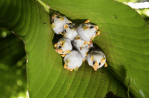
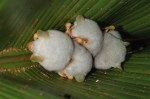
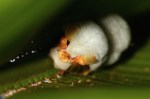


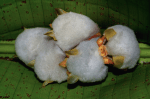

bibi:
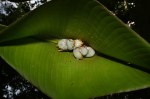
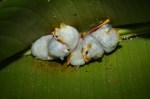
honduran white tent bats roosting under a heliconia leaf, which they sever down the length of its midrib to create a ‘tent’ that provides a waterproof shelter and protection from potential predators.
photos by (click pic) konrad wothe, kenji nishida, jenny theobald and tobias gerlach, leyo, outofsomewhere, wanja krah, alex figueroa, matt brady, and michael and patricia fogden
Adorable or what? 🙂
Just a reminder:the natural diet of these birds is BONES. Not just bone marrow; actual bone shards. They pick up huge freaking bones from carcasses and drop them onto rocks until they get spiky pieces and then they swallow them. Their stomach acid dissolves bone.
look me in the eye and tell me that’s not a fucking dragon
And they aren’t naturally red like that. That’s self-applied makeup. They find the reddest earth they can to work into their feathers as a status symbol.
And they don’t scavenge other parts of carcases, just the bones. 85-90% of their diet is exclusively bone. Hence why it’s only a myth that these birds would just pick up whole lambs and carry them off. It’s not true, but in German they’re still called Lämmergeier as a result.
So metal
Meet Pickles, aka “Catosaurus.” He was rescued in Boston and he’s over 3 feet long.
by pe_ha45
Behold the ghostly Kermode bear (Ursus americanus kermodei), also known as the “Spirit Bear”, a subspecies of the American Black Bear living in the central and north coast of British Columbia, Canada. Approximately 1/10 of their population are born with white or cream-coloured coats of fur like you see in these beautiful photos. They are not albinos or related to the Polar bear. This colour morph is due to a recessive allele common in the population.
National Geographic estimates the spirit bear population at 400-1000 individuals, saying that “the spirit bear may owe its survival to the protective traditions of the First Nations, who never hunted the animals or spoke of them to fur trappers”
In addition to their awesome appearance, the Kermode bears are also particularly successful fisher
menbears:Scientists have found that black bears are not as effective at catching fish as white bears, as the white bears are less visible from the perspective of the fish. While at night the two colors of bears have similar success rates at catching fish, such as salmon, during the day the white bears are 30% more effective.
Photos by Paul Nicklen via National Geographic
I’m so excited because I found out today that this little guy exists
He’s a Western Blind Snake and he looks like a very shiny earthworm
LOOK AT HIS LITTLE MOUTH
 The Light in the Sky